
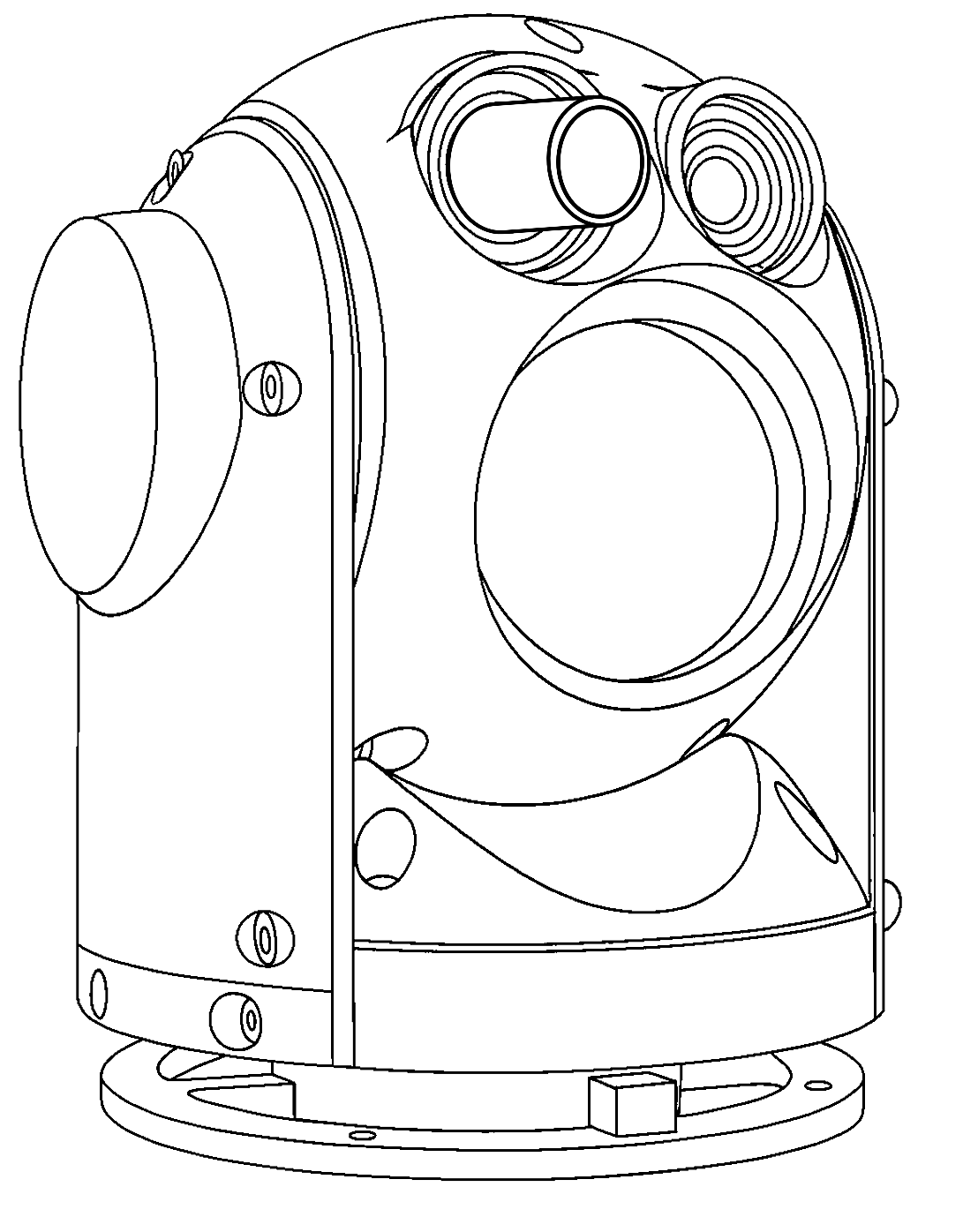
Help fund equipment and hardware to build my first concept’s prototype, Capstone, and lay the foundation for me to develop future concepts for dual-use defence tech products.
My name is Aidan Small, and I’m a high school graduate working towards founding Slater Industries, a UK-based dual-use defence technology startup with one clear mission: to protect lives through innovation and low-cost technology.
I have experience in microcomputing (Raspberry Pi, Arduino) & sensor fusion, programming (Java, Python, CSS), and mechanical & civil engineering (CAD, AutoDesk Inventor Pro, Fusion) - So I feel well equiped to apply myself to this project, and learn immensely while doing so. I'm also a Computer Science A Level award winner (2025).
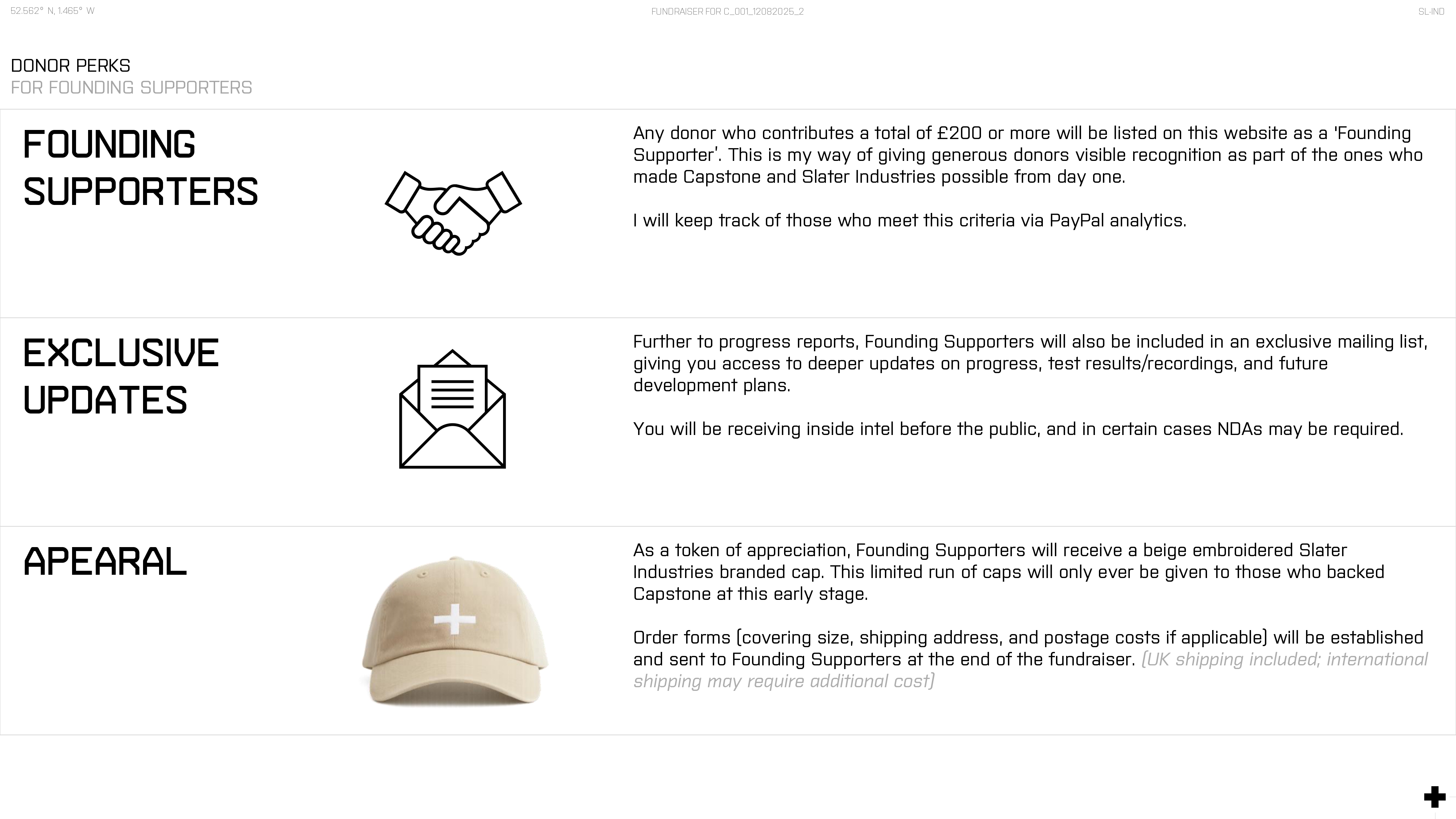
As an act of gratitude towards donors, the following will be available to you (provided you meet certain criteria):
 |
Home security and the modern battlefield is evolving - and we’ve been unprepared.
Drones costing only a few hundred pounds can inflict thousands in damage. Yet current defensive systems cost tens of thousands, and are not accessible to civilian users - creating a dangerous imbalance where attackers spend little, but defenders pay more. This leaves soldiers, infrastructure, and even civilian spaces exposed to growing threats.
As drone threats become increasingly common - both on battlefields and in civilian areas - we urgently need scalable, affordable solutions that can be deployed anywhere: from a soldier’s checkpoint to the perimeter of a power station.
That’s why I’m raising funds to build C_001 (codename: “Capstone”), the very first working prototype of my concept.
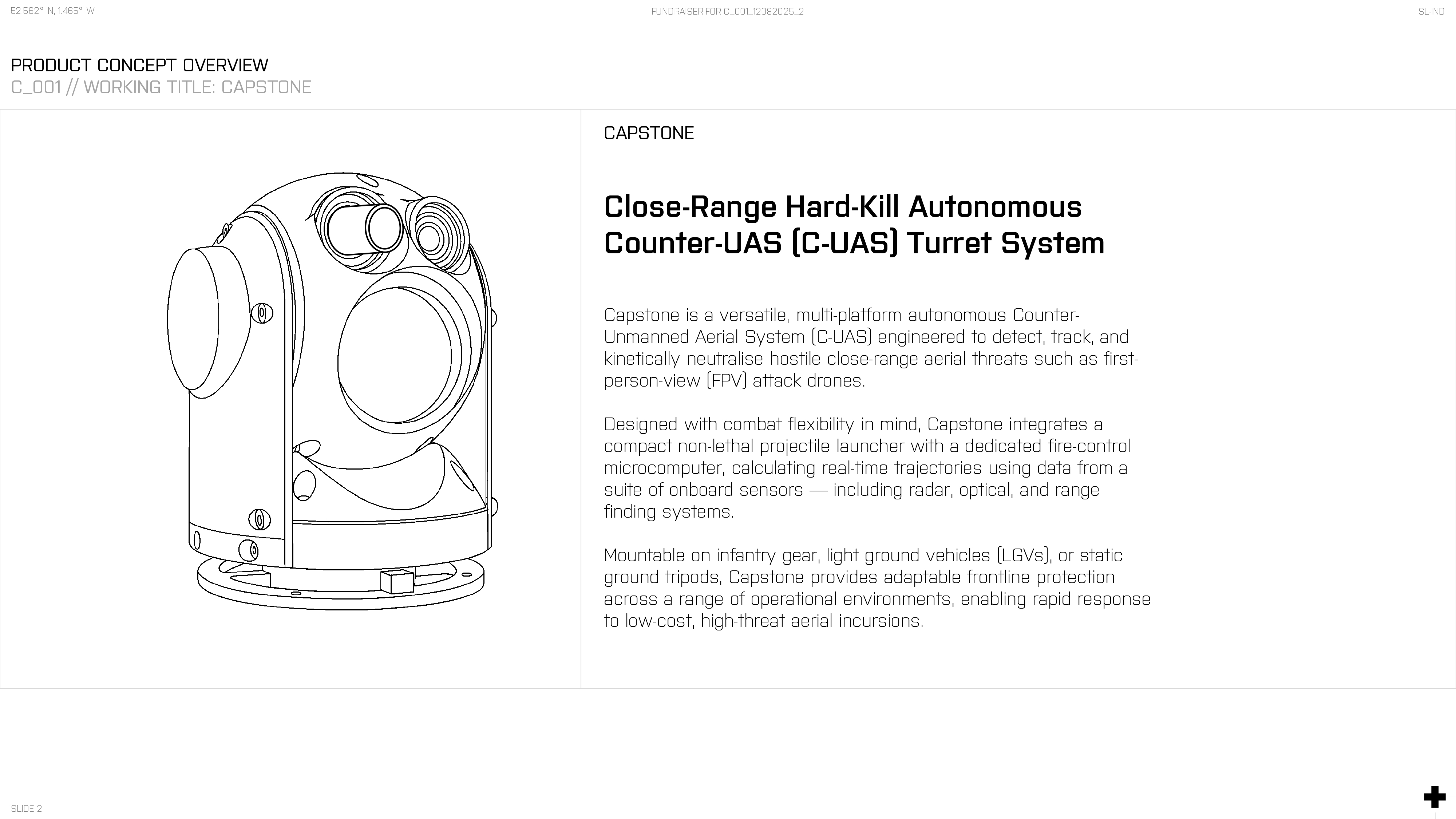
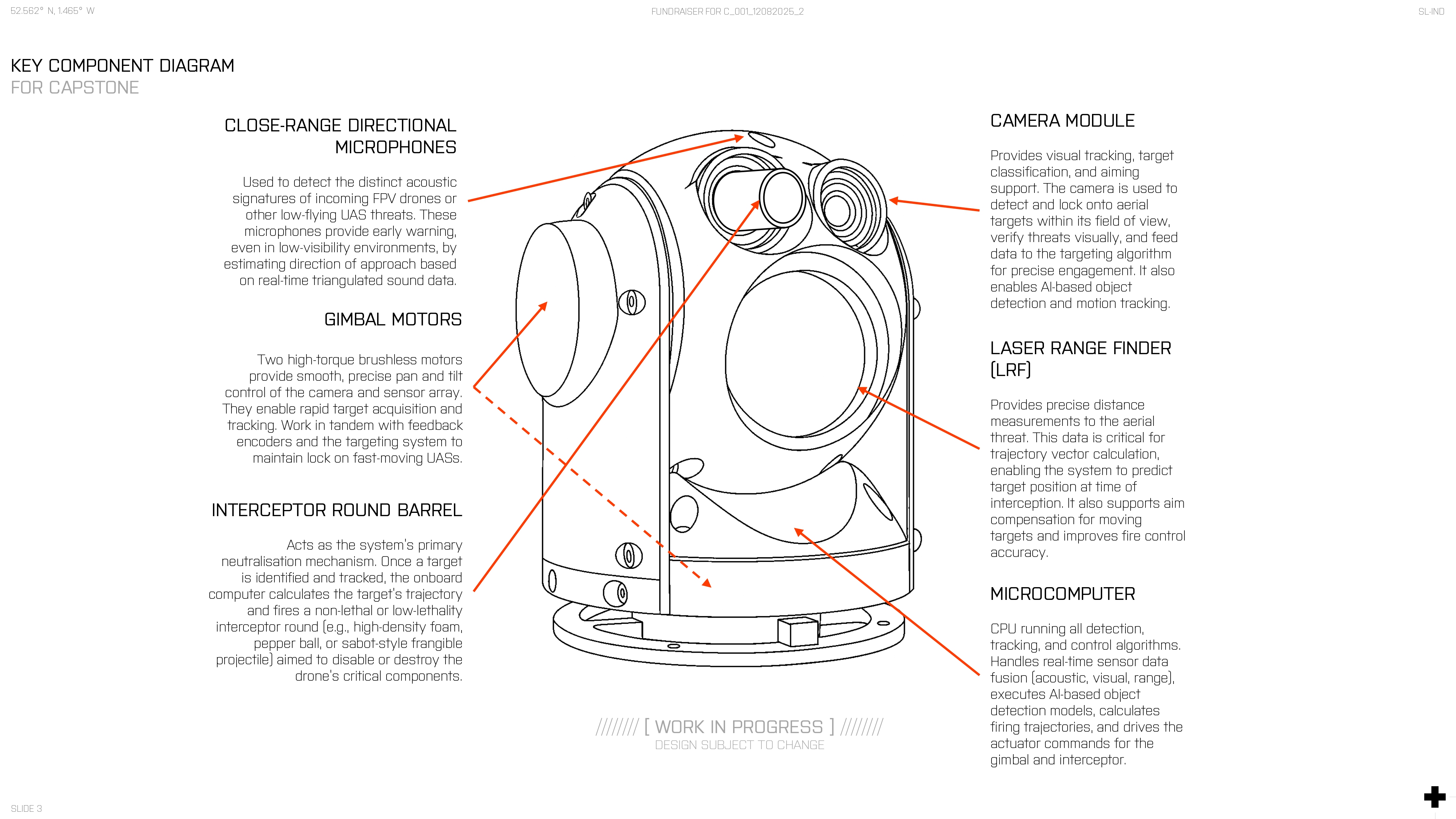
Capstone is a portable, dual-use anti-drone turret system designed to detect, track, and kinetically neutralise close-range aerial threats such as FPV attack drones and other small UASs. See below for a detailed diagram of key components in Capstone.
 |
 |
Military application: Lightweight, affordable protection for units in high-risk environments.
Civilian application: Adaptable defence for airports, power plants, and even event venues.
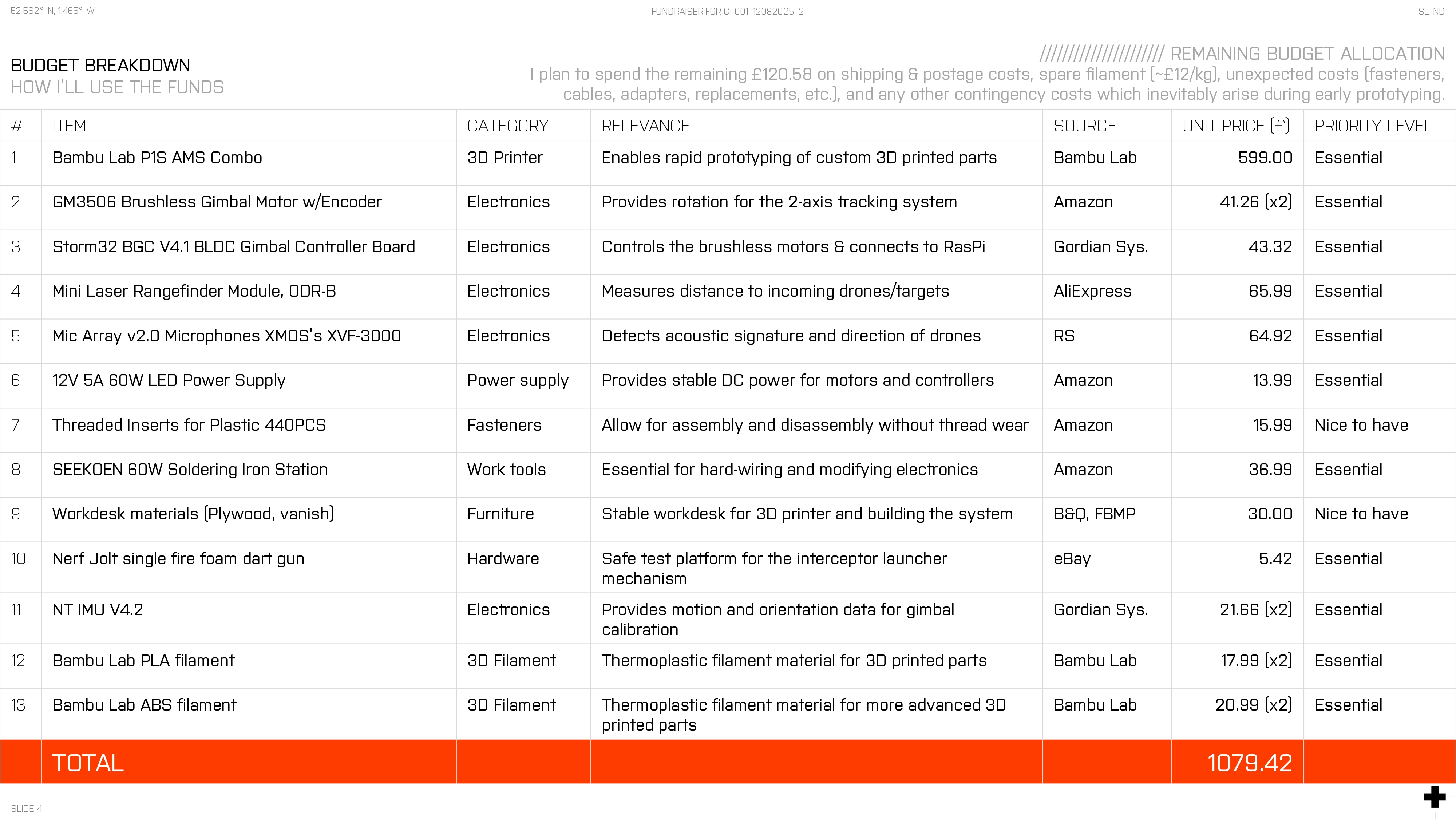
With just £1,200, I can source the 3D printer, gimbal motors, microcomputing hardware, sensor systems, and other equipment needed to bring Capstone from concept to reality. See my detailed budget breakdown below, and access the spreadsheet via this link.
 |
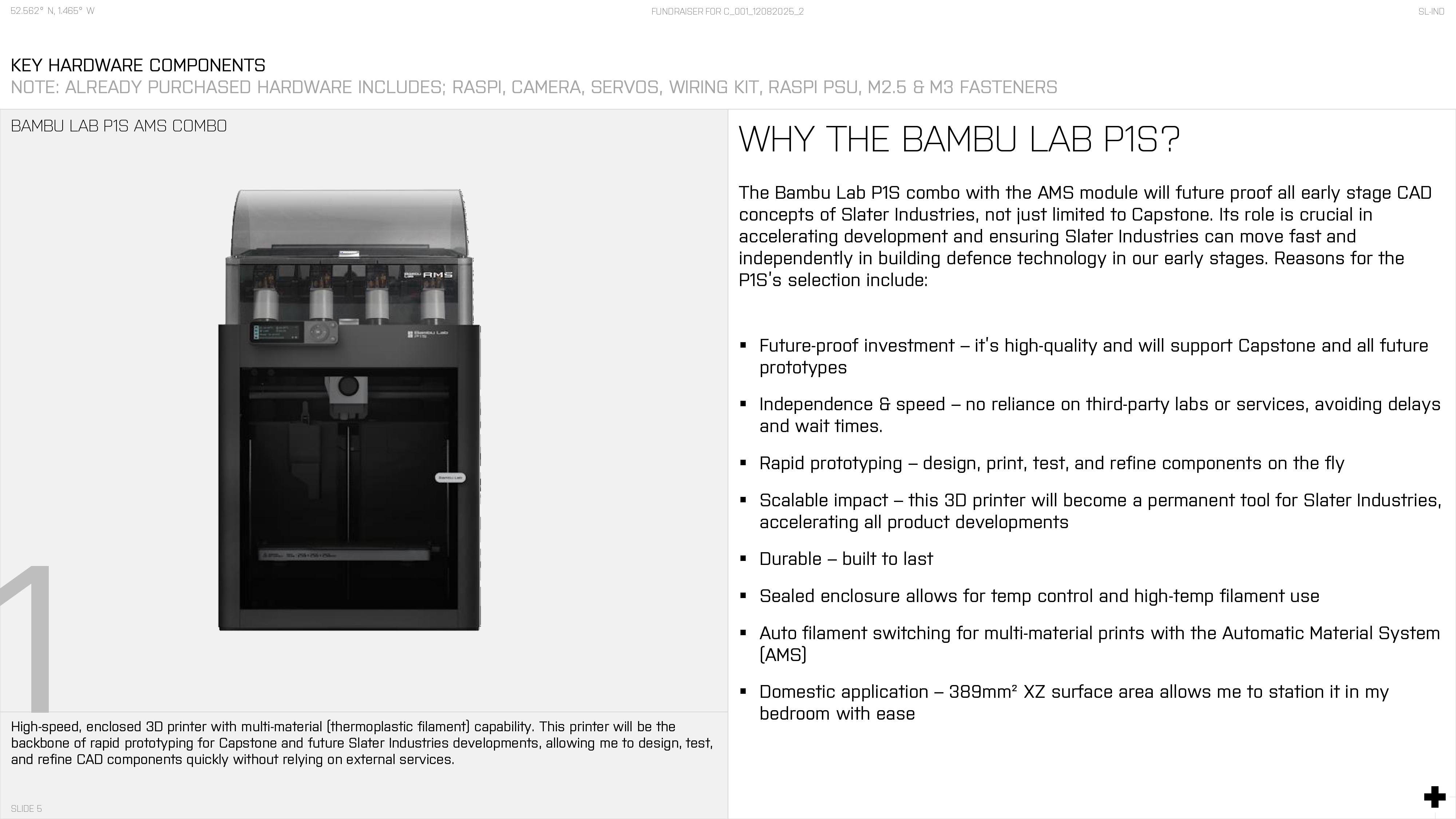
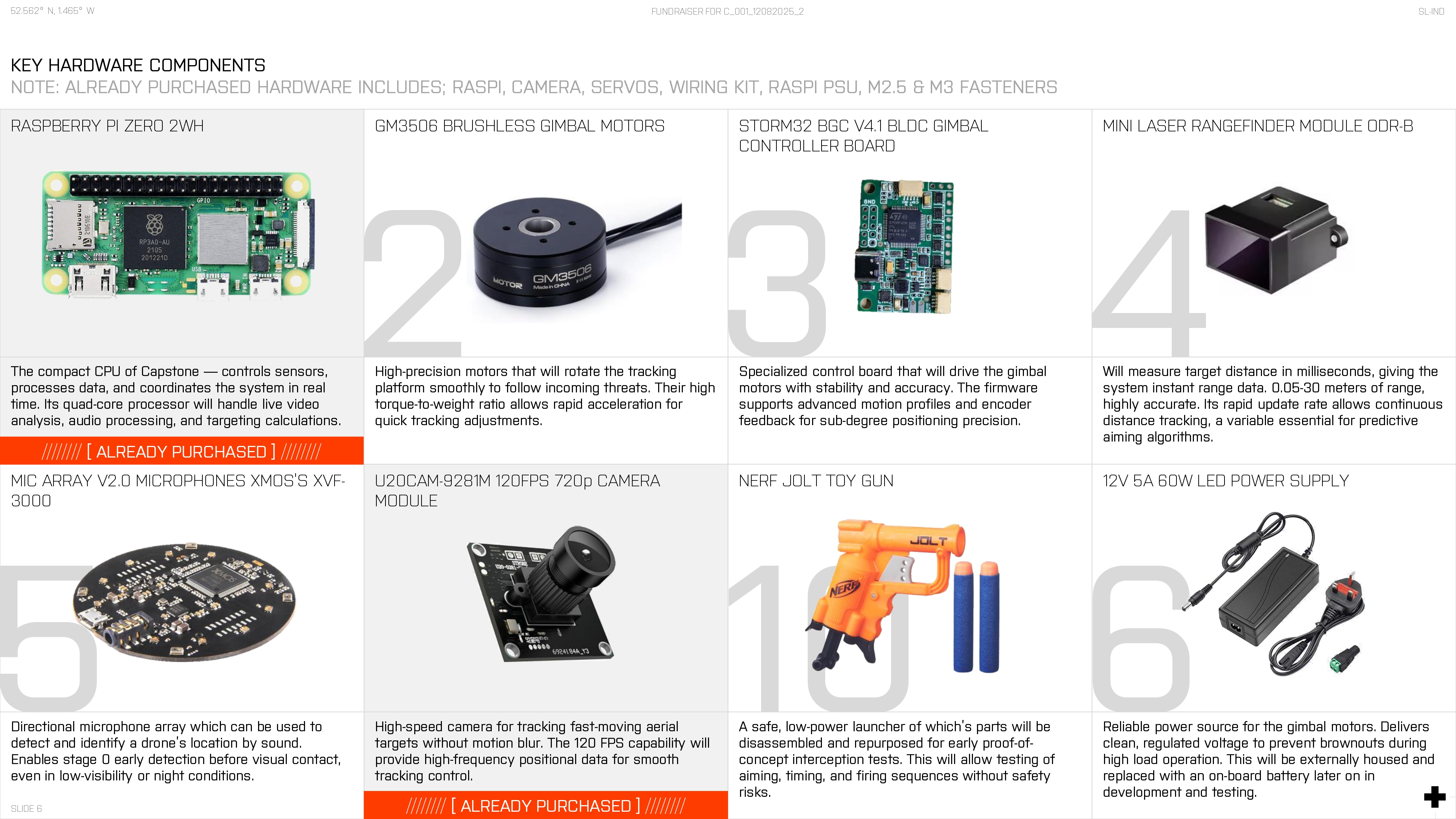
See below for breakdowns of key hardware components and equipment required to build the first working prototype of Capstone, along with future developments.
 |
 |
Using the Bambu Lab P1S AMS 3D printer, I’ll fabricate custom housings, structural parts, and servo brackets, iterating rapidly with PLA and ABS filament (PLA will suffice for early prototype prints as strength is not yet critical, while ABS provides higher durability and heat resistance for later test parts).
On the electronics side, the system is driven by a Raspberry Pi Zero 2 WH, which I’ll connect to my PC over SSH and remote desktop for headless development and testing (this avoids the need for a monitor/keyboard attached to the Pi and speeds up code iteration). All control software will be written primarily in Python, with supporting C/C++ modules where lower latency is required (Python allows rapid prototyping, while C/C++ can handle performance-sensitive code like motor loops), making use of libraries like OpenCV for vision, TensorFlow Lite for lightweight inference, and smbus/I²C for hardware communication.
The Pi will interface with the Storm32 BGC V4.1 gimbal controller and GM3506 brushless motors with encoders to provide precise pan/tilt actuation (brushless motors with encoder feedback give smoother, more accurate tracking than standard servos), while dual NT IMU V4.2 units supply accelerometer, gyroscope, and orientation data for sensor fusion and calibration (using two IMUs allows cross-checking of readings and better stability during movement).
Additional modules like a laser rangefinder and mic array will be integrated for distance estimation and acoustic testing (the rangefinder provides direct distance data for engagement logic, while the mic array enables exploration of acoustic detection as a secondary sensing mode).
Power will be provided by a regulated 12V 5A PSU (chosen to comfortably supply the motors, controller, and Pi without voltage drops under load), with the entire system assembled, wired, and debugged using a Seekoen 60W soldering station (reliable temperature control ensures consistent, safe solder joints) and a stock of fasteners and inserts for durable mounting (threaded inserts allow repeated assembly/disassembly without weakening printed parts).
Together, this hardware and development environment will allow me to implement, test, and refine the full software stack — from detection and tracking to servo control — directly on the Pi while maintaining flexible development via my PC (this hybrid workflow lets me keep the prototype small and deployable, while coding efficiently from a desktop environment).
I'm looking into the future of Slater Industries with this fundraiser. The same equipment will fuel future iterations of Capstone as well as future technologies developed by Slater Industries. Every pound takes us one step closer to building a system that could one day stop a drone from harming people, and developing other dual-use defence systems.
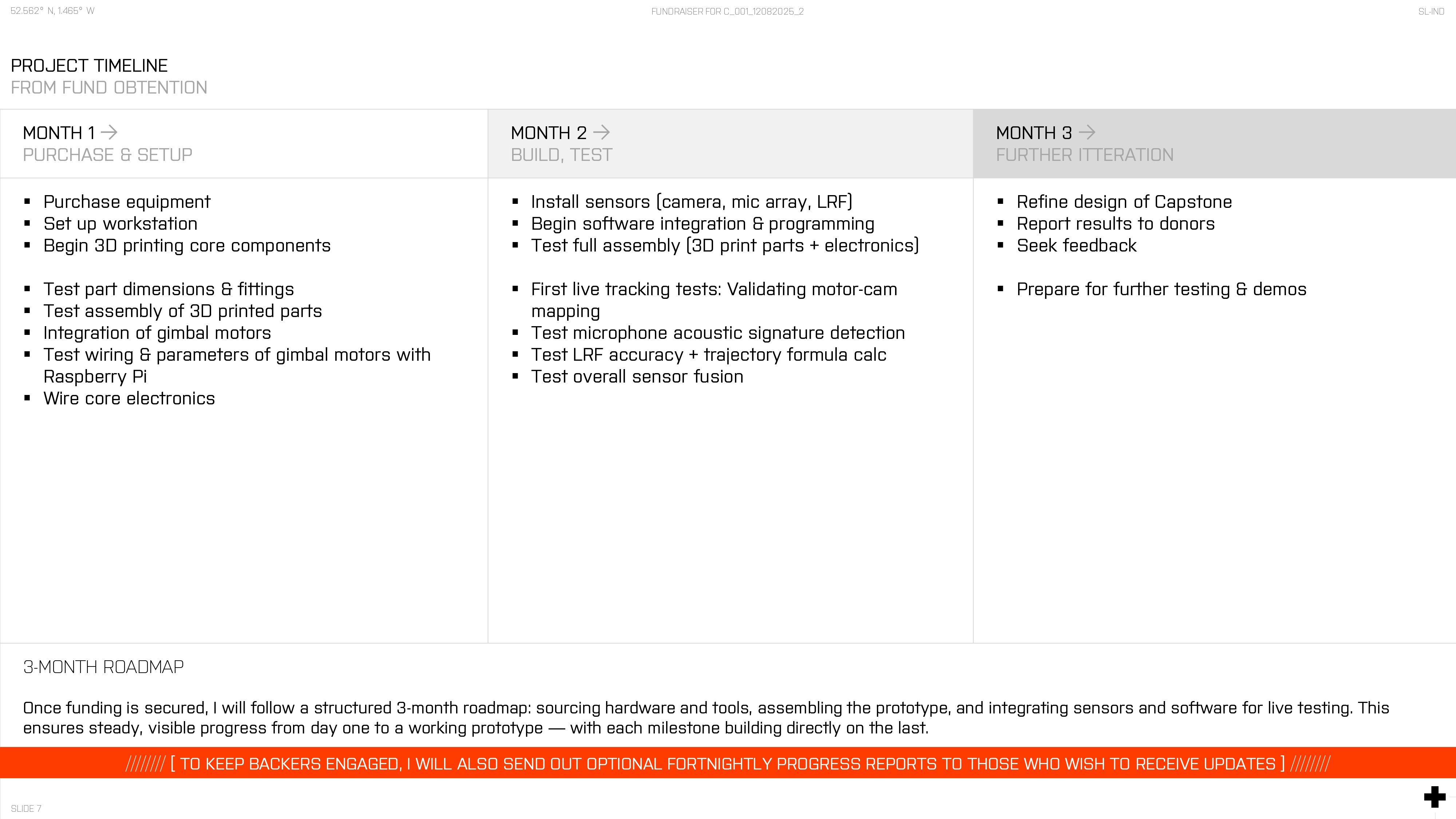
From when I receive the funds, I plan to follow a monthly month roadmap: sourcing hardware and tools, assembling the prototype, and integrating sensors and software for live testing. This ensures steady, visible progress from day one to a working prototype - with each milestone building directly on the last. Backers who opt-in can receive fortnightly progress reports. See below for the project timeline.
 |
As mentioned; To keep backers engaged, I will also send out optional fortnightly progress reports to those who wish to receive updates. Simply email slaterindustries.info@gmail.com with the subject line "Progress Reports" (no other text neccesary) and your email will be added to the mailling list, of which you can opt-out at any time upon request.
Capstone is only the beginning. My long-term roadmap expands into naval defence systems and eventually aerospace applications. My vision for Slater Industries is ambitious, impactful, and built around one core principle: flipping the balance of modern warfare back in our favour - with defences that protect lives, not drain budgets.
 |
I’ll be working on this project from my home in South Oxfordshire, England, using the tools and resources your support makes possible, either in my garage or bedroom.
Together, we can change the tide of modern defence. By backing this project, you’re not just funding a prototype - you’re helping pioneer a new era of affordable, scalable protection for both military and civilian spaces.
Let’s get this thing going.